Showing posts with label Nuclear Education Online. Show all posts

Friday, May 3, 2013

Belajar IPTEK Nuklir Ke Perancis

Peta Pembangkit Tenaga Nuklir di Prancis

Dalam bidang energi, saat ini Pemerintah Perancis berusaha mengalihkan ketergantungan terhadap minyak ke pemanfaatan energi nuklir dan berhasil menurunkan proporsi minyak bumi dalam konsumsi energi final dari 71% (1973) menjadi 39% (2003). Perancis merupakan negara dengan pemanfaatan pembangkit listrik tenaga nuklir terbesar di dunia dan peringkat dua dunia dalam kapasitas total nuklir terinstal.


Nuclear Power in France

   *France derives over 75% of its electricity from nuclear energy. This is due to a long-standing policy based on energy security.
   *France is the world's largest net exporter of electricity due to its very low cost of generation, and gains over EUR 3 billion per year from this.
   *France has been very active in developing nuclear technology. Reactors and fuel products and services are a major export.
   *It is building its first Generation III reactor and planning a second.
   *About 17% of France's electricity is from recycled nuclear fuel.


Perancis merupakan negara yang memiliki reaktor nuklir paling banyak kedua di dunia, yaitu sebanyak 59 reaktor nuklir. Perancis dipaksa memiliki banyak reaktor nuklir, karena negara ini tidak memiliki sumber daya energi yang berupa minyak, sebagai sumber energi tersebut. 

Pembangkit Tenaga Nuklir Perancis menghasilkan energi 540,6 Twh (540,6 Milyar Watt Jam) dan telah memenuhi sebanyak 78,8 % kebutuhan energi listrik di Perancis, angka ini adalah persentase tertinggi di dunia. Sehingga tarif listrik di Perancis merupakan yang termurah di Eropa. 

Sedangkan Amerika Serikat, mempunyai 104 reaktor nuklir, Amerika adalah negara yang paling banyak memiliki reaktor nuklir, yaitu sebanyak 104 reaktor nuklir komersial. Sebanyak 69 merupakan reaktor air bertenaga dan 35 reaktor air mendidih. 

Ada sebanyak 65 pembangkit listrik tenaga nuklir yang telah memiliki lisensi untuk beroperasi. Pembangkit tersebut menghasilkan energi listrik sebesar 806,2 Twh dan telah mensuplai 19,6 % kebutuhan listrik total di seluruh AS pada tahun 2008.


Bagaimana Bisa Negeri Eiffel ini Maju dalam Bidang Iptek Nuklir?

Sejarah

France has a long relationship with nuclear power, starting with Henri Becquerel's discovery of natural radioactivity in the 1890s and continued by famous nuclear scientists like Pierre and Marie Curie.

Before World War II, France had been heavily involved in nuclear research through the work of the Joliot-Curies. In 1945 the Provisional Government of the French Republic (GPRF) created the Commissariat à l'Énergie Atomique (CEA) governmental agency, and Nobel prize winner Frédéric Joliot-Curie, member of the French Communist Party (PCF) since 1942, was appointed high-commissioner.

He was relieved of his duties in 1950 for political reasons, and would be one of the 11 signatories to the Russell-Einstein Manifesto in 1955. The CEA was created by Charles de Gaulle on October 18, 1945. Its mandate is to conduct fundamental and applied research into many areas, including the design of nuclear reactors, the manufacturing of integrated circuits, the use of radionucleides for medical treatments, seismology and tsunami propagation, and the safety of computerized systems.

Nuclear research was discontinued for a time after the war because of the instability of the Fourth Republic and the lack of finances available. However, in the 1950s a civil nuclear research program was started, a by-product of which would be plutonium.

In 1956 a secret Committee for the Military Applications of Atomic Energy was formed and a development program for delivery vehicles started. In 1957, soon after the Suez Crisis and the diplomatic tension with both the USSR and the United States, French president René Coty decided the creation of the C.S.E.M. in the then French Sahara, a new nuclear tests facility replacing the C.I.E.E.S. See France and nuclear weapons.


The first nuclear power plant in France was opened in 1962.
Strategi dan Rencana Messmer 

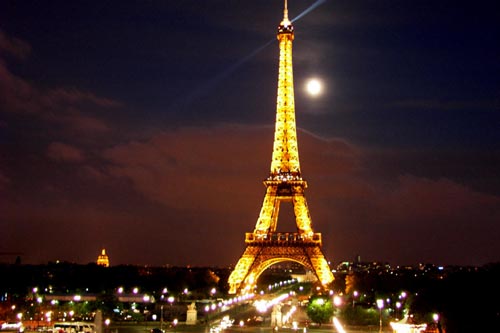
As a direct result of the 1973 oil crisis, on March 6, 1974 Prime Minister Pierre Messmer unexpectedly announced what became known as the 'Messmer Plan', a huge nuclear power program aimed at generating all of France's electricity from nuclear power. At the time of the oil crisis most of France's electricity came from foreign oil, and while it was strong in heavy engineering capabilities, France had few indigenous energy resources.


The announcement of the Messmer Plan, which was imposed without public or parliamentary debate, also led to the foundation of the Groupement des scientifiques pour l'information sur l'énergie nucléaire (Association of Scientists for Information on Nuclear Energy), formed after around 4,000 scientists signed a petition of concern over the government's action, known as the Appeal of the 400 after the 400 scientists who initially signed it.


The plan envisaged the construction of around 80 nuclear plants by 1985 and a total of 170 plants by 2000. Work on the first three plants, at Tricastin, Gravelines, and Dampierre started the same year and France installed 56 reactors over the next 15 years.


Para Pelajar Mengunjungi Fasilitas Penelitian Nuklir dan Fisika Partikel di CERN

Ekonomi dan Manajemen Energi Nuklir Prancis

Électricité de France (EDF) the country's main electricity generation and distribution company — manages the country's 59 nuclear power plants. EDF is substantially owned by the French Government, with around 85% of EdF shares in government hands . 78.9% of Areva shares are owned by the French public sector company CEA and are therefore in public ownership EdF remains heavily in debt. Its profitability suffered during the recession which began in 2008. It made €3.9 billion in 2009, which fell to €1.02 billion in 2010, with provisions set aside amounting to €2.9 billion.

The Nuclear industry has been accused of significant cost overruns and failing to cover the total costs of operation, including waste management and decommissioning.

In 2001, nuclear construction and services company Areva was created by the merger of CEA Industrie, Framatome and Cogema (now Areva NC). Its main shareholder is the French owned company CEA, but the German government also holds, through Siemens, 34% of the shares of Areva's subsidiary, Areva NP, in charge of building the EPR (third-generation nuclear reactor).


EdF said its third-generation nuclear reactor EPR project at its Flamanville, northern France, plant will be delayed until 2016, due to "both structural and economic reasons," which will bring the project's total cost to EUR8.5 billion.

Similarly, the cost of the EPR to be built at Olkiuoto, Finland has escalated. Areva and the utility involved "are in bitter dispute over who will bear the cost overruns and there is a real risk now that the utility will default. In contrast, the other reactors at Taishan in Guangdong, China are ahead or on schedule. The estimated completion is expected at 46 months, considerably faster then in France or Finland.

EdF has suggested that if the political environment causes the EPR costs to overrun, the design would be replaced with a cheaper and simpler Franco-Japanese design, the Atmea for which the design will be completed by 2013, or the already operating Franco-Chinese design, the CPR-1000.

Reaktor-Reaktor Fusi 
While fusion power is not expected to be feasible for many more decades, France has shown promise to be a forerunner in the technology by winning the bid to host the ITER reactor in Cadarache. The ITER should start actual fusion around 2018. However, ITER does not plan to generate any commercially available energy. Instead the construction of another plant, named DEMO, will test the feasibility of commercial fusion, before it is integrated into the energy grid.


Video Pembuatan Reaktor Fusi Nuklir di Prancis

Semoga Bermanfaat

Menuju Kemerdekaan Energi di Indonesia 

Sumber:

http://en.wikipedia.org/wiki/Nuclear_power_in_France
http://www.iter.org/
http://www.esdm.go.id/
http://www.world-nuclear.org/
http://home.web.cern.ch/

Sunday, April 21, 2013

E-Learning for Nuclear Newcomers

Is your country considering nuclear power?

The IAEA is here to help!

We have created an interactive e-learning series explaining the IAEA’s Milestones Approach to introducing a nuclear power programme. This approach is based on three phases and covers the 19 infrastructure issues that need to be addressed, and brings decades of expertise to life. Both newcomers and those expanding their nuclear power programmes may benefit from the e-learning series.


E-learning Modules


We have developed several interactive and engaging e-learning modules for nuclear power development:


Module 1
Introduction  
Implementing a Nuclear Power Programme
is an introduction and overview of
nuclear power infrastructure development


Module 2
HR 
 
 Developing a Human Resource Strategy
focuses on human resources management,
a crucial element of a nuclear power programme
Soon you will find other modules covering stakeholder involvement, management of a new nuclear power programme and construction management. Users should be able to complete all five modules in about 12 hours.


Acknowledgement


This e-learning project is supported by an extrabudgetary contribution from the Republic of Korea under the Peaceful Uses Initiative It is implemented by the Integrated Nuclear Power Infrastructure Group (INIG) with support from the Nuclear Power Engineering Section (NPES) of the IAEA Department of Nuclear Energy.

All of the modules are based on the IAEA publications "Milestones in the Development of a National Nuclear Infrastructure for Nuclear Power" (Nuclear Energy Series No. NG-G-3.1), other relevant IAEA publications, and current experiences from newcomer countries.

Source: IAEA

Monday, April 1, 2013

Nuclear Power, Energy Economics and Energy Security


"Tanpa cinta, kecerdasan itu berbahaya, dan tanpa kecerdasan, cinta itu tidak cukup."
 ~Ainun & Habibie~


Penulis Mengikuti Pertemuan Ilmiah dan Edukatif Mengenai Ipteks Nuklir


Economic development requires reliable, affordable electricity that is provided in sufficient quantities to satisfy the minimum energy requirements at a local, regional or national level.

As simple as this recipe for economic development appears, technological, infrastructural, financial and developmental considerations must be analysed and balanced to produce a national energy strategy.

Complicating that task is the historic fact that energy at the desired price and in the desired quantities can be neither taken for granted nor guaranteed. Energy economics and energy security determine the options available to nations working to establish a sustainable energy strategy for the future.


Seseorang pernah menulis, SIAPA yang MENGENDALIKAN AIR dan BAHAN PANGAN, DIALAH yang dapat MENGENDALIKAN MANUSIA, SIAPA yang MENGENDALIKAN ENERGI, DIALAH YANG MENGENDALIKAN BENUA dan NEGARA. SIAPA yang MENGENDALIKAN INSTITUSI KEUANGAN/FINANSIAL, DIALAH yang MENGENDALIKAN DUNIA.

Kami tambahkan siapa yang mampu mengendalikan hawa nafsu dan dirinya dialah yang akan memiliki syurga.

Penguasaan sektor-sektor strategis di bumi ini menyisakan begitu banyak keprihatinan, dimana sebagian besar aset dunia dikuasai oleh segelintir orang dan mayoritas manusia hanya menikmati sebagian kecil sumber daya di bumi ini.

Inilah yang kita perlu pikirkan bersama dan kerjakan dengan semangat pantang menyerah, mensejahterakan seluruh manusia dengan cara serta kasih-Nya.

Jika saja orang-orang yang memegang kendali sumber daya-sumber daya strategis di bumi ini memiliki hati yang penuh cinta-kasih terhadap sesama, maka dipastikan kehidupan masa depan manusia akan menjadi lebih indah. 

Energy Economics 

A nuclear power reactor is relatively expensive to build but relatively inexpensive to run. That makes it a good investment in some situations, but not in others. It is more attractive where energy demand is growing rapidly, where alternatives are scarce or expensive, where energy supply security is a priority, where reducing air pollution and greenhouse gas emissions is a priority, where financing is available that can wait for longer term returns (which is more characteristic of governments than private industry), and where financial risks are lower due to more predictable electricity demand and prices, stable market structures and strong non-partisan political support.

The 68 power reactors currently under construction around the world reflect these characteristics of favorable investment environments. 

Energy Security 

Another major consideration, in addition to price and resource base considerations, is energy security. The best way to strengthen a country’s energy security is by increasing the diversity and resiliency of energy supply options. For many countries, expanding nuclear power would increase diversity in their electricity supplies. 

Nuclear power has two features that generally further increase resiliency.

Firstly, nuclear electricity generating costs are much less sensitive to changes in fuel prices than are fossil-fired electricity generating costs.

Secondly, the basic fuel uranium is available from diverse producer countries, and small volumes are required, making it easier to establish strategic inventories. 

In practice, the trend has been away from strategic stocks toward supply security based on a diverse well- functioning market for uranium and fuel supply services. But the option of relatively low-cost strategic inventories remains available for countries that find it important. 

Energy Choices 

Countries are different. The right energy mix for a country will depend on how fast its energy demand is growing, on the availability of alternatives like hydro power or shale gas, on its financing options, and on its national preferences and priorities as expressed in national politics. How countries balance the various considerations such as accident risks, inexpensive electricity, mitigating climate change, air pollution, jobs, and energy import dependence is at least partly a matter of national preference.


"Semoga setiap pembelajaran dan usaha kita di dunia ini menjadi bekal untuk bertemu dengan-Nya di Syurga kelak"


Sumber:


http://nuclearscienceandtechnology.blogspot.com/  (Sekolah Sains dan Teknologi Nuklir)


http://ocw.mit.edu/courses/nuclear-engineering/ (Nuclear Engineering OpenCourseWare from MIT)


http://fisika.upi.edu/ (Jurusan Pendidikan Fisika, FPMIPA Universitas Pendidikan Indonesia)

Ucapan Terima Kasih Kepada:


Kak Rezy Pradipta, Ph.D.
(Alumni Tim Olimpiade Fisika Indonesia, Belajar di Department of Nuclear Science & Engineering at MIT)

Dr. Mohamed Mustafa ElBaradei, J.S.D. (Former Director General of IAEA)

Prof. Mujid S. Kazimi, Ph.D. (Director, Center for Advanced Nuclear Energy Systems MIT)

Prof. Djarot Sulistio Wisnubroto, M.Sc., D.Sc. (Presiden BATAN)

Kak Iqbal Robiyana, S.Pd. (Founder Center for Nuclear Education at Indonesia University of Education)

Teh Nina Widiawati, S.Pd. (Mahasiswa S2 Bidang Peminatan Fisika Nuklir)

Teh Fitria Miftasani, S.Pd. (Mahasiswa S2 Bidang Peminatan Fisika Nuklir)

Dr. Petros Aslanyan, M.Sc. (Joint Institute for Nuclear Research, Rusia & Yerevan State University)


Semua keluarga dan sahabat-sahabat ku.

Terima Kasih


Semangat Semoga Bermanfaat   

Wednesday, October 10, 2012

Gaya Nuklir Kuat


Satu tahun yang lalu penulis berkesempatan membahas mengenai gaya-gaya fundamental di alam, yang terdiri dari Gaya Gravitasi, Gaya Elektromagnetik, Gaya Nuklir Kuat dan Gaya Nuklir Lemah, pada kesempatan kali ini kiranya akan dikupas mengenai apa itu gaya nuklir kuat?

GAYA di sini bukan merujuk pada sebuah kata yang amat terkenal dalam kehidupan sehari-hari misalnya:

Wow GAYA banget sich elo? Bukan gaya yang itu.

Penjelasan Gaya dalam Fisika:

In physics, a force is any influence that causes an object to undergo a certain change, either concerning its movement, direction, or geometrical construction. It is measured with the SI unit of newtons and represented by the symbol F. In other words, a force is that which can cause an object with mass to change its velocity (which includes to begin moving from a state of rest), i.e., to accelerate, or which can cause a flexible object to deform. Force can also be described by intuitive concepts such as a push or pull. A force has both magnitude and direction, making it a vector quantity.


Interaksi Kuat atau Gaya Kuat

In particle physics, the strong interaction (also called the strong force, strong nuclear force, or color force) is one of the four fundamental interactions of nature, the others being electromagnetism, the weak interaction and gravitation. At atomic scale, it is about 100 times stronger than electromagnetism, which in turn is orders of magnitude stronger than the weak force interaction and gravitation.

The strong interaction is observable in two areas: on a larger scale (about 1 to 3 femtometers (fm)), it is the force that binds protons and neutrons (nucleons) together to form the nucleus of an atom. On the smaller scale (less than about 0.8 fm, the radius of a nucleon), it is the force (carried by gluons) that holds quarks together to form protons, neutrons and other hadron particles.

In the context of binding protons and neutrons together to form atoms, the strong interaction is called the nuclear force (or residual strong force). In this case, it is the residuum of the strong interaction between the quarks that make up the protons and neutrons. As such, the residual strong interaction obeys a quite different distance-dependent behavior between nucleons, from when it is acting to bind quarks within nucleons. The binding energy related to the residual strong force is used in nuclear power and nuclear weapons.

The strong interaction is thought to be mediated by gluons, acting upon quarks, antiquarks, and other gluons. Gluons, in turn, are thought to interact with quarks and gluons because all carry a type of charge called "color charge." Color charge is analogous to electromagnetic charge, but it comes in three types rather than one, and it results in a different type of force, with different rules of behavior. These rules are detailed in the theory of quantum chromodynamics (QCD), which is the theory of quark-gluon interactions.

Lihat Juga:
 Bacaan Lebih Lanjut:
"Kekuatan dan gaya-gaya di alam sesungguhnya menunjukan Ke-Maha'an Sang Pencipta Semesta Raya Ini"
~A.N.~

Sumber:

1. http://astrophysicsblogs.blogspot.com/2012/03/gaya.html
2. Wikipedia
3. Sekolah Sains dan Teknologi Nuklir
4. CERN
5. International Atomic Energy Agency

Thursday, May 31, 2012

IPTEK Nuklir Untuk Sekolah Menengah

Nuclear Education for Junior, Vocational Education and Senior High School


Unduh Bukunya di Sumber ini: Download

Saturday, May 19, 2012

Mengembangkan Pendidikan dan Riset Nuklir

Strategi Mengembangkan IPTEKS Nuklir di Indonesia


Visi

Energi Nuklir sebagai pemercepat kesejahteraan bangsa.

Misi

  1. Melaksanakan penelitian, pengembangan dan penerapan energi nuklir, isotop dan radiasi dalam mendukung program pembangunan nasional
  2. Melaksanakan manajemen kelembagaan untuk mendukung kegiatan penelitian, pengembangan dan penerapan energi nuklir, isotop dan radiasi

Tujuan

Tujuan pembangunan iptek nuklir adalah memberikan dukungan nyata dalam pembangunan nasional dengan peran :
  1. Meningkatkan hasil litbang energi nuklir, isotop dan radiasi, dan pemanfaatan/pendayagunaanya oleh masyarakat dalam mendukung program pembangunan nasional
  2. Meningkatkan kinerja manajemen kelembagaan dan penguatan sistem inovasi dalam rangka mendukung penelitian, pengembangan dan penerapan energi nuklir, isotop dan radiasi

Sasaran

Sasaran pembangunan iptek nuklir yang ingin dicapai adalah :
  1. Peningkatan hasil litbang enisora berupa bibit unggul tanaman pangan, tersedianya insfrastruktur dasar pembangunan PLTN, pemahaman masyarakat terhadap teknologi nuklir, pemanfaatan aplikasi teknologi isotop dan radiasi untuk kesehatan; dan
  2. Peningkatan kinerja manajemen kelembagaan dan penguatan sistem inovasi meliputi kelembagaan iptek, sumber daya iptek dan penguatan jejaring iptek dalam rangka mendukung pemanfaatan hasil penelitian, pengembangan dan penerapan energi nuklir, isotop dan radiasi di masyarakat

Prinsip :

Segenap kegiatan iptek nuklir dilaksanakan secara profesional untuk tujuan damai dengan mengutamakan prinsip keselamatan dan keamanan, serta kelestarian lingkungan hidup.

Nilai-nilai :

Segenap kegiatan nuklir dilandasi nilai-nilai :
  • Visionary, Innovative, Excellent dan Accountable
  • Kejujuran, Kedisiplinan, Keterbukaan, Tanggungjawab, Kreatif dan Kesetiakawanan
Serta Berpedoman pada 5 (lima) pedoman Sekolah Sains dan Teknologi Nuklir yaitu :

  • Berjiwa pionir
  • Bertradisi ilmiah
  • Berorientasi industri
  • Mengutamakan keselamatan
  • Komunikatif

Thursday, August 19, 2010

Nuclear Education Center


Nuclear Education Center


Visi
Riset dan Pengembangan Pendidikan Nuklir


Misi

Jaringan Pendidikan Nuklir

Program

Pengenalan dan Edukasi Nuklir kepada Sekolah-sekolah

Fokus

Pendidikan Nuklir


From: 

Nuclear Education Online (NEO) is an educational consortium between the University of Arkansas for Medical Sciences and the University of New Mexico College of Pharmacy.

Educational Programs
Nuclear Education Online program began as an educational program for nuclear pharmacists.  The NEO program is expanding to provide specialized training in the following areas:


Comments from NEO students:


"I really enjoyed the course and thought it was a tremendous learning experience.  I will encourage my fellows to take this online course."   Dr. Sandra A.,  Pennsylvania
"I have taken many courses over the years and this is a good one."  Dr. John H.,  Georgia 
"It was a good course and I loved the convenience of it."  Dr. Ghazanfar K.,  Wisconsin
"I think the course is good.  Most of the material is well explained and reviewed appropriately in the self assessments and exams.  The support from the staff was excellent-emails were answered almost immediately, with appropriate considerations to comments."  Dr. Gila P.,  New York
"I had just finished the 100 hours in the traditional classroom course and your course was much more thorough and in-depth." Dr. Paul S., Florida


Online Courses
Registered Students can login at http://distance-ed.uams.edu
 
Students completing this program of 80 or 200 hours of didactic training with the 620 or 500 hours of experiential training will be eligible for certification by the Nuclear Regulatory Commission.  The student-centered curriculum will include interactive web based course materials, discussion groups, preceptor-led activities, and problem based learning case studies.  
Depending on the specific program, the NEO curriculum may consist of the following components:
1.  Introduction to Nuclear Education Online:  Before you step off into the nuclear physics, we want to make sure that you have the tools to succeed.  When you register in the program we will take you through a few exercises to make sure that you have the needed hardware and software (and know how to use them!) and refresh your memory on some basic math skills that may have become a little rusty.  
2.  Nuclear Physics:  An understanding of nuclear physics is critical to understanding radiation safety, radiopharmaceuticals and radiation biology.  Concepts and physical properties governing the atom to include systems and units of measure, atomic and nuclear structure, and particulate and electromagnetic radiation.  This material is fundamental to the entire curriculum.
3.  Instrumentation:  How does a GM meter work?  Why is important to determine the MCA counting efficiency?  This course will cover the operational principles of radiation detection equipment to include statistical application and quality control.  
4.  Radiation  Biology:  Introduction to the interactions of radiation and biological systems, including chronic and delayed effects through physical and chemical changes from radiation.  The biological basis for radiation safety will be presented.
5.  Radiation Safety:  A review of the legal, biological and administrative aspects of radiation protection in nuclear medicine. Emphasis on practical means of minimizing radiation exposure to the patient, staff and general public. 
Accepted by Florida Board of Pharmacy, Texas Bureau of Radiation Control, Nuclear Regulatory Commission, and the Certification Board of Nuclear Cardiology.


Education Goals

The objective of the program is to provide a high quality educational program to working professionals and students throughout the country. 
Advantages of the Nuclear Education Online Program:


  • High quality educational program


  • Student-centered interactive program


  • Training independent of locale


  • No need to leave home for education


  • Experienced faculty


  • Trained preceptors/mentors for each student


  • 10 week didactic component (for radiopharmacists)


  • Problem-based-learning and interactive WebCT technology employed


  • Continuing education credit


  • Additional training and education for preceptors


  • Continued access to educational material following program completion
Nuclear Pharmacy Program: The NEO faculty has used the APhA Syllabus for Nuclear Pharmacy Training, developed by the leaders in the field of nuclear pharmacy, as the backbone for the NEO program curriculum.  The entire curriculum is mapped to the syllabus to ensure a comprehensive education and training program.  You can view the entire APhA Syllabus Click Here. 
Other Programs:  Curriculum development utilized guidelines of the appropriate regulatory agencies, such as the NRC and DOT.

Faculty


Nicki L. Hilliard, Pharm.D., MHSA, BCNP, FAPhA
Professor, UAMS College of Pharmacy
Associate Professor, UAMS College of Medicine
University of Arkansas for Medical Sciences
NLHilliard@uams.edu; 501-686-6398
Hilliard CV
Dr. Hilliard has over twenty years of experience teaching radiopharmacy at the University of Arkansas for Medical Sciences to pharmacy students, nuclear medicine technology students, and nuclear medicine & radiology resident physicians.  She also had seven years experience as a nuclear pharmacy manager for Syncor before coming to UAMS.  Dr. Hilliard is an innovative user of technology and has over ten years of experience designing material for the Internet.  She was named a Teaching Scholar in Distance Education by the University of Arkansas System and was recognized with the inaugural UAMS Educational Technology Excellence Award..  She serves as webmaster for the Nuclear Pharmacy website for which she received the American Pharmaceutical Association Award of Merit for her contributions to the nuclear medicine community.   Dr. Hilliard has held positions of national leadership in nuclear pharmacy including chair of the APhA Section on Nuclear Pharmacy and Chair of the BPS Nuclear Pharmacy Specialty Council.  She served as Member-at-Large of the APhA-APPM Executive Committee.  Dr. Hilliard received the 2008 William H. Briner Distinguished Achievement Award for Nuclear Pharmacy.  She served on the faculty of the ASNC Board Review in 2008 & 2009.

Dao Le, PharmD, BCNP
NEO Curriculum Expansion Coordinator
University of Arkansas for Medical Sciences
Assistant Professor
dle@uams.edu; 501-686-6361
Dao Le's CV
Dao Le, a Board Certified Nuclear Pharmacist, is an Assistant Professor of Nuclear Pharmacy at University of Arkansas for Medical Sciences. She received a BA degree in biology at Westminster College in Fulton, MO in 1998. She then continued on to University of Arkansas for Medical Sciences where she received a PharmD degree and a Radioactive Materials Authorized User certification. After pharmacy school, she joined the TycoHealthcare/Mallinckrodt as a nuclear staff pharmacist in Houston, TX. At Mallinckrodt she participated in many corporate initiatives including serving on the Practice of Pharmacy Advisory Committee, developing and implementing company Standard of Operating Procedures and served as chair the committee to revise the Mallinckrodt intern manual. She was also an active participant in student recruiting developments. While at Mallinckrodt in Houston, she also served as the radiation safety officer.

She has a Board of Pharmacy license in Arkansas, Texas, Maryland, and Colorado. Dr. Le has been an active member of APhA and has served as APhA-APPM New Practitioner in the Nuclear Pharmacy Practice Section.


Jeffrey P. Norenberg, PharmD. BCNP, FASHP, FAPhA
Associate Professor of Pharmacy Practice
University of New Mexico College of Pharmacy
Jeff Norenberg, a Board Certified Nuclear Pharmacist, is a Professor of Pharmacy Practice and Chair of the Radiopharmacy Graduate Concentration at the University of New Mexico Health Sciences Center College of Pharmacy. Under the mentorship of William Hladik, he has established a practice caring for patients receiving diagnostic and therapeutic radiopharmaceuticals. He has informed pharmacists about the opportunities and responsibilities of pharmaceutical care in radiopharmacy at national and international meetings. He is a consultant to nuclear medicine physicians, radiologists, fellows, and residents, participating in decisions regarding patient treatment, and administering radiopharmaceuticals. He has conducted numerous pre-clinical and clinical research studies with novel radiopharmaceuticals and has implemented quality of life assessment in patients receiving therapeutic radiopharmaceuticals.
As an educator, he has taught extensively on the clinical applications of radiopharmaceuticals to pharmacy students, physicians, radiology residents and fellows.  He has served on thesis committees of students seeking the Master of Science in Pharmaceutical Sciences degree with emphasis in radiopharmacy. He has authored numerous peer-reviewed journal articles, book chapters; and abstracts presented at national and international meetings, and he has received grants and contracts exceeding $1 million.
He has received the United States Public Health Service Outstanding Achievement Citation and the Department of Interior Meritorious Service Commendation for his work in the practice of pharmacy.

Martha W. Pickett, MHSA, CNMT
Chairman, Nuclear Medicine Technology,
UAMS College of Health Related Professions
PickettMarthaW@uams.edu 
Pickett CV
Martha Pickett has chaired the Department of Nuclear Medicine Technology at UAMS since its inception in 1985.  This program, which offers a bachelor's degree in nuclear medicine technology, has already experienced the world of online education when it began offering its classroom courses to cohorts of students in multiple sites outside Little Rock beginning in 1999.
Martha's educational background includes two bachelor's degrees, one in zoology and another in nuclear medicine technology.  She has her master's degree in health services administration and is completing coursework on a Ph.D. in public policy with an emphasis on health policy.  She has worked actively in the professional associations at the national level and has served as president of the Society of Nuclear Medicine Technologist Section.  She has also served on the board of directors of the Nuclear Medicine Technology Certification Board.


Kristina Wittstrom, RPh, BCNP, FAPhA
Experiential Coordinator
UNM College of Pharmacy
aaaaa@unm.edu; 505-272-3661
Wittstrom CV
A graduate of the University of New Mexico College of Pharmacy specializing in radiopharmacy, entered commercial nuclear pharmacy in 1979.  Practiced in Southern California as pharmacy manager and radiation safety officer until 1993.  Became BCNP in 1982 with recertifications in 1993 and 2000.
Joined the Syncor International Corporation Professional Development staff in 1993.  Responsibilities included coordinating and teaching in the internal Authorized User Radiopharmacist Training Program.  Served as technical support to practicing nuclear pharmacists.  Currently Experiential Coordinator for the Radiopharmacy Education program at University of New Mexico.
Active in the APhA Section on Nuclear Pharmacy.  Most recent accomplishment served as chairperson of the Ad Hoc Committee for Nuclear Pharmacy Technician Training Program.  This program was accepted and published by the APhA.
Thanks for:

Nuclear Education Online (NEO) is an educational consortium between the University of Arkansas for Medical Sciences and the University of New Mexico College of Pharmacy.